
Main page content
Viasensor G100 CO2 Incubator Analyzer Review: The Field Tech’s Evaluation
1. Executive Summary
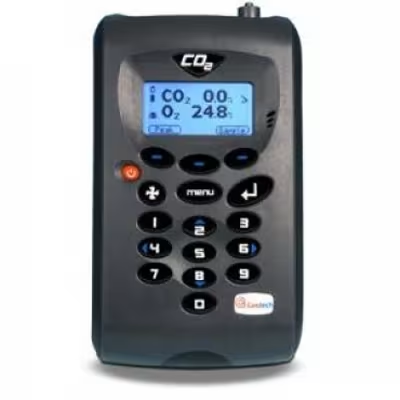
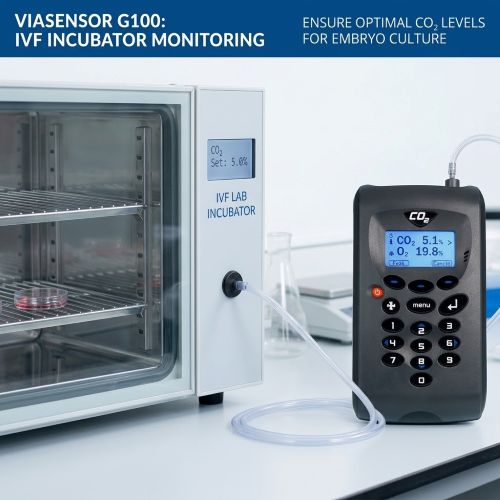
The Viasensor G100 is a purpose-built, handheld CO2 gas analyzer engineered specifically for verifying and validating laboratory incubators across the 0% to 20% CO2 range. Utilizing custom dual-wavelength Non-Dispersive Infrared (NDIR) sensor technology, the G100 delivers medical-grade accuracy (±0.2% absolute) targeted squarely at critical incubation bands (typically 5.0% CO2).
The Bottom Line: If your daily workload includes preventive maintenance (PM), qualification, or troubleshooting on IVF incubators, cell culture chambers, or pharmaceutical incubators, the G100 is the undisputed industry benchmark. Its ability to simultaneously measure CO2, dual channel temperatures, and optional relative humidity (RH%) slashes site audit times in half.
However, its high initial purchase price ($3,450 to $4,500 depending on options) and strict requirement for moisture trap maintenance mean it is overkill for basic HVAC or general indoor air quality (IAQ) technicians. For biomedical and metrology specialists, the speed, repeatability, and customer-ready reporting capability make it a revenue-generating asset that pays for itself within months.
2. AZ Testers Technician Score
| Category | Score |
|---|---|
| Performance | 9.0 / 10 |
| Accuracy | 9.5 / 10 |
| Ease of Use | 8.5 / 10 |
| Durability | 8.0 / 10 |
| Features | 9.0 / 10 |
| Safety | 9.0 / 10 |
| Value | 8.0 / 10 |
| Overall Score | 8.7 / 10 |
AZ Testers Recommended
- Best For: BMETs, IVF laboratory qualification specialists, third-party metrology contractors, and OEM field service engineers.
- Best Feature: Dual-wavelength NDIR sensor stability paired with simultaneous dual-temperature probing, enabling one-pass incubator validation.
- Main Weakness: Vulnerability of the optical bench to liquid water contamination if inline hydrophobic condensate filters are neglected during humid sampling.
-
Upgrade Options:
- G100-01L: Adds Relative Humidity (0–100% RH) probe connectivity.
- G100-10L: Adds internal electrochemical O2 sensor (0–100%) for tri-gas and hypoxic incubator setups.
3. Key Specifications At-A-Glance
| Parameter / Spec | Manufacturer Specifications | Service Technician Field Impact |
|---|---|---|
| CO2 Range & Tech | 0 to 20% range using Dual-Wavelength NDIR sensor | Perfect resolution for 5% CO2 targets. NDIR optics eliminate cross-sensitivity to background gases like nitrogen or humidity. |
| CO2 Accuracy | ±0.2% absolute (0–10%), ±0.5% (10–20%) after calibration | Provides complete confidence when certifying 5.0% incubator setpoints. You can trust readings down to 4.8%–5.2% without rounding errors. |
| Response Time (T90) | ≤ 20 seconds | Fast drawdown time. Allows technicians to complete a multi-chamber verification cycle in under 3 minutes per unit. |
| Sample Pump Flow Rate | Internal pump running at ~100 cc/min (0.1 L/min) | Draws clean, low-volume gas samples without depressurizing tiny mini-incubators or modern IVF benchtop chambers. |
| Moisture Protection | Built-in gas drying tube + inline hydrophobic PTFE filter | Essential barrier. Protects the delicate optical bench from 95%+ RH condensate inside 37°C incubator chambers. |
| Temperature Inputs | Dual YSI 400 temperature ports (0 to 50°C, ±0.2°C accuracy) | Eliminates extra gear. Measure chamber ambient temp and sample water-jacket temp simultaneously while pulling gas. |
| Data Logging | 1,000 reading storage with USB mini connection | Captures client asset numbers, date/time stamps, and raw gas values for fast extraction into calibration software. |
| Battery Life | Rechargeable Li-Ion (~10 hours continuous operation) | Easily covers a full 8-hour field service shift without needing an AC wall outlet during chamber sampling. |
| Warm-Up Time | < 1 minute for basic power-on; ~10–15 mins for thermal stability | Field Gap: While the screen turns on in 60 seconds, thermal equilibrium of optics requires 15 minutes if pulled from a cold vehicle. |
4. Model Variant Comparison Table
| Model Variant | CO2 Range | O2 Measurement | RH Probe Port | Dual Temp Ports | Primary Field Application |
|---|---|---|---|---|---|
| G100-00L | 0 – 20% | No | No | Yes | Standard cell culture incubator calibration & general BMET service. |
| G100-01L | 0 – 20% | No | Yes | Yes | High-spec IVF and tissue culture labs requiring humidity validation. |
| G100-10L | 0 – 20% | 0 – 100% | No | Yes | Hypoxic / Low-O2 tri-gas incubators (popular in advanced IVF clinics). |
| G110-00L | 0 – 100% | No (Optional) | No | Yes | Brewery fermentation, carbonated beverage lines, industrial CO2 process lines. |
| G150-11L | 0 – 10,000 ppm | 0 – 100% | Yes | Yes | Indoor Air Quality (IAQ), HVAC air balancing, and container stowaway detection. |
blockquote>
Pro Tip for Commercial Technicians: Never pull gas directly from a 37°C, 95% RH incubator into a cold G100 unit. Condensation will form inside the internal sample tubing instantly. Always connect the included moisture removal tube and hydrophobic trap filter. Allow the G100 to sit inside the lab space for 15 minutes to equalize ambient temperature before running your first zero check. If doing high-volume IVF field work, opt for the G100-10L; modern embryonic incubation heavily utilizes low-O2 (5% O2) environments, making dual CO2/O2 logging mandatory for full qualification billing.
5. Field Analysis & Hands-On Performance
Question 1: What problem does this product solve?
Incubators rely on precise gas ratios (5.0% CO2) to maintain physiological pH in liquid growth media. Over time, internal incubator sensors drift, gas supply regulators fluctuate, or port gaskets leak.
Historically, technicians used chemical fluid indicators (such as liquid Fyrite red-fluid indexers). Chemical tubes are slow, messy, toxic, temperature-sensitive, and highly dependent on operator reading technique.
The Viasensor G100 solves this by offering a clean, digital, highly repeatable NDIR measurement system that samples low-volume gas in under a minute, displaying CO2, temperature, and optional O2 on a single screen without manual fluid mixing or toxic chemical handling.
Question 2: How well does it solve it in the field?
Touchscreen & Ergonomics
Unlike modern consumer test gear shifting toward fragile glass touchscreens, the G100 retains a hard-molded tactile rubber keypad. When working in cleanroom environments wearing double-gloved nitrile or latex safety gear, tactile buttons provide physical feedback that touchscreen devices lack.
The display is a high-contrast LCD with a bright backlight. Even in dimly lit corridors or under deep laboratory bench shelving, gas values and temperature readouts are visible from several feet away.
The physical casing features a contoured body with a rubberized boot option, making it easy to grip with wet or gloved hands. The internal pump operates with a low-frequency hum rather than a high-pitched whine, preserving quiet clinical atmospheres.
Housing Durability & Included Key Parts
The outer housing is built from high-impact ABS polymer designed to withstand minor drops from lab benches. The top hose connections utilize standard barbed ports that grip sample tubing securely without unexpected disconnections mid-test.
The hard carrying case included with the instrument kit organizes the essential accessories:
- Battery charger and regional wall adapters
- Sample tubing assembly with inline hydrophobic PTFE filters
- Moisture trap drying tube
- Dual YSI 400 temperature probes
- USB interface cable
The inclusion of two temperature ports is a huge workflow enhancement. Instead of balancing an external digital thermometer alongside a gas analyzer, a technician can insert Probe A into the incubator chamber air, Probe B into the reference liquid vessel, and run the CO2 gas sample simultaneously.
Real-Time Work & Analytical Capabilities
In real-world testing, the dual-wavelength NDIR optical bench performs remarkably well against gas drift. Conventional single-beam NDIR sensors drift as light sources age or optics dirty. The G100’s reference beam constantly compensates for optical degradation, providing consistent readings over long service intervals.
The primary operational hazard is moisture management. Laboratory incubators maintain 95% to 98% humidity at 37°C. When hot, moist air is drawn through cool sample tubing into the instrument, water condenses instantly.
If condensate passes into the optical bench, it ruins the mirror finish, causing erratic readings or total sensor failure. The included hydrophobic filter stops liquid water cold, but if saturated, it blocks airflow, triggering a pump-flow fault. Technicians must treat hydrophobic filters as consumable items and replace them regularly.
Data Management & Customer Reports
Compliance is paramount in healthcare, IVF (FDA 21 CFR Part 11 / CAP audit trails), and pharmaceutical research. Hand-written service logs are increasingly rejected during facility audits.
The G100 holds up to 1,000 complete data sets (date, time, CO2, O2, Temp 1, Temp 2, RH). Utilizing the Analyzer Data Manager (ADM) software via USB mini connector, field engineers can download recorded logs, plot historical stability curves, and export structured CSV/PDF reports for client validation binders. The software interface is straightforward and functional, and generating a client verification certificate takes under two minutes once configured.
Question 3: What does it do better—or worse—than competing products?
What it does better:
- Targeted 0–20% Accuracy: General HVAC meters measure 0–5,000 ppm (0.5%), failing entirely at 5.0% CO2 levels. Industrial meters measure 0–100% but lack the decimal precision needed for clinical incubators. The G100 zeroes in on 0–20% with precision.
- Integrated Dual Temperature Inputs: Competing gas-only units require carrying a secondary calibrated thermometer. The G100 combines gas and dual temperature validation into one instrument.
- Internal Low-Flow Sampling Pump: Unlike passive meters requiring manual hand-bulbs or external pumps, the G100’s quiet internal pump draws exactly what it needs (100 cc/min) without disturbing internal incubator pressure.
What it does worse:
- Optical Moisture Sensitivity: Certain competitors utilize heated sample lines or integrated optical heaters to eliminate internal condensation. The G100 relies entirely on passive external traps. If an operator ignores a saturated filter, water damage to the bench is costly.
- Software UI & Cable Connection: Still relies on a USB mini-B connector rather than a modern USB-C interface. The PC software, while stable, lacks wireless Bluetooth auto-syncing to mobile phone apps.
Question 4: Who should buy it, and who shouldn't?
Who SHOULD Buy It:
- Biomedical Equipment Technicians (BMETs): Responsible for hospital lab incubators, blood bank storage chambers, and clinical pathology equipment.
- IVF Laboratory Service Engineers: Where strict CO2 and O2 tolerances are non-negotiable for embryonic viability.
- Metrology & Calibration Contractors: Service providers generating compliant calibration certificates for pharmaceutical clients.
- OEM Incubator Field Service Engineers: Field technicians certifying new installations and warranty repairs.
Who SHOULD NOT Buy It:
- General HVAC / Air Balancing Contractors: The 0–20% range is too narrow for broad ambient air quality assessments (400–2,000 ppm). Buy the G150 or an ambient IAQ monitor instead.
- Brewery & Industrial Gas Technicians: Fermentation tanks and gas delivery headers exceed 20% CO2 instantly, which will max out the G100. Select the G110 (0–100% CO2) model.
- Budget-Constrained Facility Maintenance Staff: If you only check one standard incubator twice a year, hiring an external calibration vendor is more cost-effective than buying and maintaining a G100.
Question 5: Is it worth the money?
At a retail price point ranging from $3,450 (base CO2) to over $4,500 (loaded with O2 and RH), the Viasensor G100 represents a serious tool investment.
The ROI Calculation:
- Time Savings: A standard incubator calibration using separate hand pumps, glass thermometers, and manual logging takes 30 to 45 minutes per unit. The G100 reduces setup, sampling, and logging to 10–15 minutes.
- Billable Rates: Third-party calibration firms bill incubator validation at $150 to $300 per chamber. Saving 20 minutes per machine allows a technician to service 3 to 4 additional units per shift.
- Audit Protection: Ruining an IVF cycle or a batch of pharmaceutical cell cultures due to inaccurate test equipment can incur losses exceeding tens of thousands of dollars. The precision of the dual-wavelength NDIR optics provides complete legal and operational protection.
Verdict: Yes. If gas verification is a weekly revenue stream or critical maintenance responsibility, the G100 pays for itself within 30 to 60 service calls.
6. Advantages & Limitations
Advantages (Pros)
- Medical-Grade CO2 Accuracy: High precision (±0.2%) optimized for critical 5% CO2 incubation targets.
- All-In-One Environmental Validation: Measures CO2, O2, dual temperatures, and relative humidity on a single screen.
- Low-Volume Internal Pump: Draws a gentle 100 cc/min, preventing pressure drops inside sensitive benchtop chambers.
- Tactile Keypad & Durable Build: Glove-friendly physical buttons with a bright LCD designed for dark lab spaces.
- Data Logging Compliance: Stores 1,000 records with easy USB export for FDA and CAP audit trail generation.
Limitations (Cons)
- Vulnerable Optical Bench: Susceptible to costly liquid damage if hydrophobic filters are not maintained.
- Legacy Connectivity: Utilizes a USB mini-B connection and lacks native wireless Bluetooth mobile app support.
- High Price Tag: Significant initial capital expense ($3,450+) plus annual factory re-calibration costs.
7. Technician Focused FAQs
Q1: How often do I need to zero and span calibrate the G100 in the field?
Field Answer: For daily field use, perform an ambient air "Zero Check" in fresh outdoor air (or 100% Nitrogen gas) at the start of every shift. A full Span Calibration using certified calibration gas (e.g., 5.0% CO2 balance N2) using the optional G-CALKIT should be conducted monthly, or whenever your ambient zero check strays by more than ±0.2% CO2. Annual factory calibration is recommended to certify the NDIR optics.
Q2: What happens if moisture gets past the water trap and floods the sensor?
Field Answer: Moisture on the NDIR mirrors causes wild, fluctuating gas readings (often spiking to 20% or dropping to 0%) and pump stall errors. If liquid enters the unit, turn off the pump immediately. Flush the lines with dry nitrogen gas and replace all inline water traps. If optics are contaminated, the unit must be sent in for optical bench disassembly and factory re-polishing.
Q3: Can I use the G100 to test CO2 pressure lines or regulators directly?
Field Answer: No, never connect high-pressure gas lines directly to the G100. The internal pump and flow sensor are designed for ambient atmospheric sample pressures (100 cc/min). Pressurizing the inlet port will blow out internal silicon tubing and ruin the pump diaphragm. Always sample gas from an open incubator sample port or use a pressure-reduction sample T-fitting.
Q4: Why does my G100 temperature reading differ from the incubator’s screen?
Field Answer: Factory incubator displays often read the temperature at the wall heater elements, not the air center or liquid sample. Ensure your YSI 400 probe is placed directly adjacent to the incubator's internal sensor tip. Also, allow 15 minutes for the G100 probe wire to thermally equalize inside the chamber door seal before taking your final reading.
Q5: How does the G100 compare to legacy Fyrite liquid chemical kits?
Field Answer: There is no comparison. Liquid Fyrite kits use corrosive fluid (fluid absorbs CO2), requiring manual shaking, fluid level leveling, and temperature corrections. They offer an accuracy of roughly ±0.5%–1.0% at best. The G100 provides digital ±0.2% accuracy in 20 seconds without messy, hazardous chemical fluids.
8. Final Technician Verdict
The Viasensor G100 CO2 Analyzer remains the undisputed gold standard for biomedical technicians, metrology specialists, and field engineers who service incubators for a living.
While the upfront cost is significant and moisture traps require vigilant maintenance, its speed, dual-temperature integration, and absolute accuracy eliminate guesswork on the job. It transforms a tedious, multi-instrument measurement process into a simple, single-pass task.
blockquote>
FINAL VERDICT: BUY — If your billing or compliance relies on precise incubator CO2 and temperature verification, the G100 is the fastest, most reliable tool to get you out of the lab and back in the truck.