
Main page content
MRU AMPRO 1000 Combustion Analyzer Review: Field Test & Specs
Executive Summary
Every service technician asks one core question before buying a new instrument. Will this tool help me diagnose problems faster, accurately, safely, and reliably?
More importantly, is it actually worth the money on a working truck? That practical question guides every part of this field review.
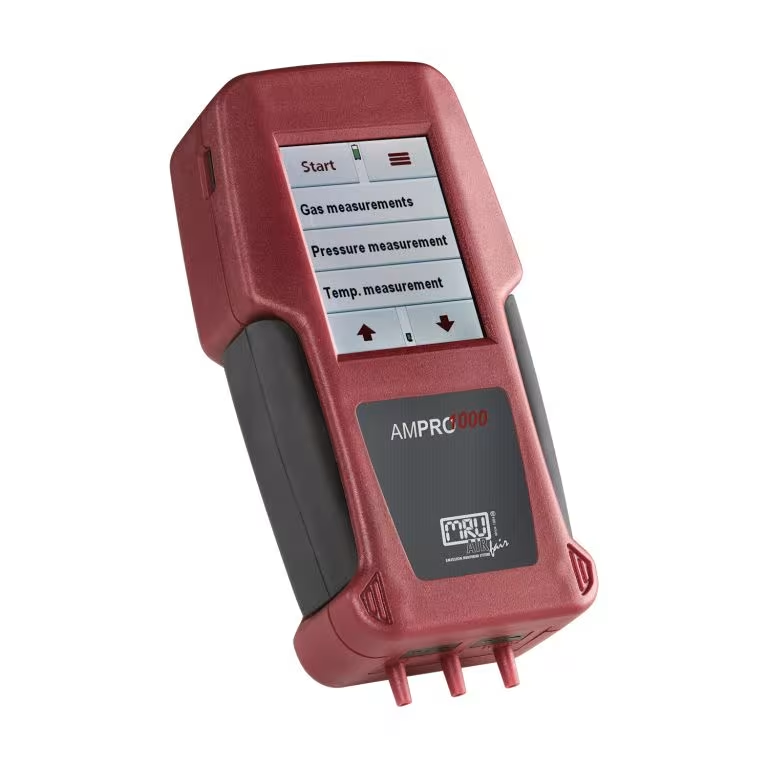
The MRU Instruments AMPRO 1000 is a compact, German-engineered handheld combustion analyzer built for daily HVAC and boiler service.
Modern condensing furnaces, modulating boilers, and power burners no longer forgive rough guesswork with a manifold gauge and mirror.
Without hard flue-gas data, technicians risk leaving behind incomplete combustion, dangerous carbon monoxide levels, or repeat nuisance lockouts.
In this review, we strip away glossy brochure claims and judge the AMPRO 1000 against real basement and mechanical-room conditions.
We organize our evaluation around five practical questions every working technician asks:
- What problem does this product solve?
- How well does it solve it in the field?
- What does it do better or worse than competing products?
- Who should buy it, and who should skip it?
- Is it worth the money?
If you service residential or light-commercial heating equipment, the AMPRO 1000 delivers serious diagnostic muscle in a pocket-sized housing.
However, heavy commercial boiler mechanics running continuous all-day tuning will quickly notice where its external water trap hits its limits.
AZ Testers Technician Score
- Performance: 8.7 out of 10
- Accuracy: 9.1 out of 10
- Ease of Use: 8.4 out of 10
- Durability: 8.5 out of 10
- Features: 8.6 out of 10
- Safety: 9.2 out of 10
- Value: 8.8 out of 10
- Overall Score: 8.8 out of 10 — AZ Testers Recommended
- Best for: Residential HVAC service technicians, oil burner mechanics, and light-commercial heating specialists who need fast flue-gas verification and draft readings.
- Best feature: Hydrogen-compensated CO sensor paired with MRU Sensor Management field-replaceable cells that eliminate factory calibration downtime.
- Main weakness: Resistive color touchscreen requires firm pressure with winter gloves, and the external condensate trap demands steady monitoring on condensing furnaces.
- Upgrade path: Heavy commercial and industrial boiler technicians should step up to the MRU AMPROplus or MRU NOVAcompact for multi-gas expansion and active cooling.
Key Specifications At-A-Glance
Manufacturer datasheets look impressive on a desk, but specs only matter when they save callbacks in a cramped utility closet.
The table below translates official MRU AMPRO 1000 numbers into real jobsite impact.
| Parameter and Spec | Manufacturer Specifications | Service Technicians Field Impact |
|---|---|---|
| Oxygen (O2) Sensor | Long-life electrochemical cell, 0 to 21.0% Vol., ±0.2% Vol. accuracy | Gives rock-solid excess air and combustion efficiency math while lasting roughly four years between replacements. |
| Carbon Monoxide (CO) Sensor | H2-compensated cell, 0 to 4,000 ppm (10,000 ppm overload), ±10 ppm or ±5% accuracy | Prevents false high-CO readings caused by free hydrogen during burner light-off or rich-firing troubleshooting. |
| Nitric Oxide (NO) Sensor | Optional third cell, 0 to 1,000 ppm (5,000 ppm overload), ±5 ppm or ±5% accuracy | Lets technicians verify low-NOx boiler compliance and calculate total NOx without buying a dedicated emissions rig. |
| Stack and Flue Gas Temp | -40°F to 2,192°F (-40°C to 1,200°C), 0.1°F resolution, ±4°F accuracy under 392°F | Handles everything from condensing PVC vent pipes to high-temperature cast-iron boilers and oil flues. |
| Draft and Differential Pressure | ±80 inH2O range, ±0.01 inH2O accuracy on low draft ranges | Replaces a separate digital manometer for checking over-fire draft, stack draft, and gas valve manifold pressure. |
| Combustion Calculations | Real-time CO2, Efficiency (up to 120%), Heat Loss, Excess Air, Lambda, CO to CO2 ratio | Shows air-free CO behavior and condensing efficiency instantly so you can dial in modulating gas valves fast. |
| Display and Controls | Backlit color TFT touchscreen with menu-guided interface | Easy to read in dark basements, though heavy leather gloves require a firm tap or stylus tip. |
| Battery and Weight | 2,250 mAh Li-Ion battery (10+ hours runtime), 1.1 lbs weight with 2 sensors | Survives a full winter shift and hangs securely on furnace panels using four integrated rear magnets. |
| Data Storage and Transfer | 1,000 tests across 1,000 sites internal memory, Micro-SD card, USB, IrDA, optional Bluetooth | Lets you log before-and-after tuning snapshots, export CSV files, or print physical combustion tickets on site. |
Model Variants and Lineup Comparison
MRU Instruments sells the AMPRO 1000 in several bundled kits and sensor setups alongside heavier step-up analyzers.
Choosing the right kit up front saves you from buying expensive accessories piecemeal later.
| Model or Kit Variant | Gas Sensors Included | Key Included Accessories | Relative Cost Tier | Ideal Technician Profile |
|---|---|---|---|---|
| AMPRO 1000 Base Kit (690122) | O2 (Long-Life) and CO (H2-compensated) | Analyzer, 10-inch flue probe, 5-foot sample hose, charger | Entry-tier professional investment | Techs upgrading an older analyzer who already own a rugged hard transport case. |
| AMPRO 1000 Field Kit (690125) | O2 (Long-Life) and CO (H2-compensated) | Adds ABS hard transport case, 4 GB Micro-SD card, USB cable | Mid-range professional investment | Everyday residential and light-commercial HVAC service technicians (best overall value). |
| AMPRO 1000 Printer Kit (690126) | O2 (Long-Life) and CO (H2-compensated) | Adds high-speed IrDA wireless thermal printer and paper rolls | Upper-mid professional investment | Boiler mechanics and commercial contractors required to leave printed tickets on equipment. |
| AMPRO 1000 3-Gas Config | O2, CO (H2-compensated), and NO cell | Adds field-installed Nitric Oxide sensor for NOx calculations | Upper-mid professional investment | Specialists working in strict low-NOx air-quality districts or tuning commercial water heaters. |
| MRU AMPROplus (Step-Up) | Up to 7 gas sensors (O2, CO, NO, NO2, SO2) | Larger screen, 20-hour battery, heavy-duty industrial probe options | High-end commercial investment | Dedicated commercial or industrial boiler technicians and emissions compliance contractors. |
Pro Tip for Commercial Technicians
Pay close attention to sample conditioning if you tune large Scotch Marine boilers or cascading commercial condensing boilers above 1,000,000 BTU per hour.
The AMPRO 1000 relies on a compact external inline water trap and particulate filter to strip moisture from the flue sample.
That passive design keeps the unit lightweight and inexpensive to maintain on everyday residential calls.
However, a small passive bowl fills up fast during extended 20-minute high-fire and low-fire sweeps on wet commercial stacks.
If you run continuous tuning on commercial boilers, choose an analyzer with an active Peltier cooler like the MRU NOVAcompact or AMPROplus.
Field Analysis and Real-World Performance
Question 1: What Problem Does This Product Solve?
Modern heating equipment leaves almost zero margin for error during routine service or startup.
Setting manifold pressure to 3.5 inH2O on a high-efficiency furnace only tells half the story.
Venting restrictions, fouled secondary heat exchangers, or drifting gas valves can push carbon monoxide into dangerous territory even when gas pressure looks normal.
The AMPRO 1000 solves this blind spot by combining four separate diagnostic instruments into one hand-sized tool:
- A real-time flue-gas combustion analyzer measuring O2, CO, calculated CO2, excess air, lambda, and efficiency.
- A dual-port digital differential manometer for stack draft and gas valve pressure checks.
- A dual-channel differential thermometer for stack temperature and combustion air temperature.
- An ambient room-air carbon monoxide safety tester for mechanical rooms and living spaces.
Instead of dragging three separate meters into a tight crawlspace or attic, you grab one compact case and verify combustion in three minutes.
Question 2: How Well Does It Solve It in the Field?
Touchscreen and Ergonomics: Weighing around 1.1 pounds with two sensors installed, the AMPRO 1000 balances easily in one hand while you drill a quarter-inch test port.
Four strong magnets recessed into the back housing grip galvanized furnace cabinets without sliding down when the indoor blower kicks on.
The backlit color TFT touchscreen displays gas measurements, pressure readings, and temperature channels in clean, high-contrast blocks.
In a dark basement with poor lighting, the screen stays crisp and readable from an arm away.
One honest field caveat is the resistive touch panel, which requires firm pressure rather than a light smartphone brush tap.
Thick winter work gloves will not register easily, so you need a deliberate fingertip press or the included stylus tip.
Housing Durability and Included Key Parts: MRU built this analyzer inside a fiberglass-reinforced shell with rubberized side grips that survive concrete floor drops.
Reinforced collars protect the bottom gas barb and differential pressure ports so they do not snap off when pulling stiff tubing in freezing weather.
The 10-inch stainless-steel flue probe includes a sliding nickel-plated cone stopper that locks tightly into standard test holes.
Along the 5-foot silicone hose sits a clear inline condensate trap and fine particulate filter that protect the internal pump.
On condensing furnaces where flue gas exits saturated with water vapor, droplets condense inside the hose almost immediately.
Hanging the analyzer upright and emptying the clear trap bowl between runs keeps damaging moisture away from the electrochemical cells.
Real-Time Work and Analytical Capabilities: Startup purge takes roughly 60 seconds in fresh air before the analyzer locks onto zero.
A standout technical advantage inside this unit is the hydrogen-compensated CO sensor.
On budget analyzers without hydrogen compensation, free hydrogen produced during burner light-off cross-reacts with the CO cell and spikes readings artificially high.
The AMPRO 1000 filters out hydrogen interference, giving you true carbon monoxide numbers when condemning a cracked heat exchanger or tuning oil burners.
Watching O2, CO to CO2 ratio, and excess air update live on one screen makes dialing in modulating gas valves straightforward.
You can spot an air-shutter restriction or dirty burner ribbon early by watching the CO to CO2 ratio climb before raw CO alarms.
Data Management and Customer Reports: Callbacks and liability disputes disappear when you document your combustion numbers on every job.
The AMPRO 1000 stores up to 1,000 complete test records organized across 1,000 customer sites inside internal memory.
A built-in Micro-SD slot accepts a standard 4 GB card so you can export CSV test logs straight onto a shop laptop.
For commercial accounts requiring physical proof on site, the IrDA infrared port beams data straight to the wireless thermal printer in seconds.
Technicians who prefer paperless dispatch tablets can also order the Bluetooth option to send live readings to the MRU mobile app.
Question 3: What Does It Do Better or Worse Than Competing Products?
Compared against mainstream two-gas HVAC combustion analyzers from Testo, Fieldpiece, and Bacharach, the AMPRO 1000 carves out a distinct identity.
- Where it beats competitors: Pre-calibrated plug-and-play sensors let you swap spent cells at your workbench in five minutes without factory downtime. Its hydrogen-compensated CO accuracy and 1.1-pound pocket footprint also outperform heavier rivals in the same class.
- Where competitors beat it: Rivals with physical pushbuttons or capacitive glass screens are easier to operate while wearing heavy leather winter gloves. Some competing field analyzers also include active water-stop pump shutoffs that tolerate neglect better during long condensing-boiler runs.
Advantages and Limitations
5 Advantages (Pros)
- Field-Replaceable Pre-Calibrated Sensors: MRU Sensor Management technology eliminates weeks of factory service downtime during busy winter heating months.
- Hydrogen-Compensated CO Accuracy: Delivers reliable, interference-free carbon monoxide readings on modulating gas valves, condensing furnaces, and oil burners.
- True All-in-One Diagnostic Footprint: Combines flue-gas analysis, differential pressure, dual-channel temperature, and ambient CO testing in a 1.1-pound body.
- Long-Life O2 Cell and 10-Hour Battery: Reduces long-term ownership costs and easily powers through a full shift of back-to-back service calls.
- Flexible Documentation Options: Supports 1,000-site internal memory, direct Micro-SD CSV export, IrDA thermal printing, and optional Bluetooth app connectivity.
3 Limitations (Cons)
- Resistive Touchscreen Requires Firm Pressure: Navigating menus while wearing thick winter gloves takes practice compared to physical tactile buttons.
- Passive External Water Trap Needs Vigilance: High-moisture condensing flues require frequent trap checks to prevent condensate carryover into the sensor block.
- Bluetooth Is an Optional Add-On: Unlike newer app-first competitors that build wireless connectivity into every base SKU, Bluetooth requires selecting the upgraded configuration.
Technician-Focused FAQs
1. Can I replace the O2 and CO sensors myself in the truck?
Yes, you can replace both sensors yourself in a few minutes using pre-calibrated MRU Sensor Management modules. Simply remove the rear access cover, unplug the spent sensor, plug in the new cell, and run a fresh-air zero cycle.
2. How does the AMPRO 1000 handle wet flue gas from condensing furnaces?
It uses an inline external condensate trap and particulate filter on the sample hose to separate water before gas reaches the pump. Always hang the analyzer vertically with its rear magnets and empty the trap bowl after every condensing furnace test.
3. Is the AMPRO 1000 suitable for verifying a cracked heat exchanger?
Yes, you can test flue gas both before and after the indoor blower motor energizes. Watch for a sudden jump in flue O2 alongside erratic carbon monoxide spikes when the blower pressurizes the heat exchanger.
4. Can I add the Nitric Oxide sensor later if I buy the two-gas kit today?
Yes, the AMPRO 1000 chassis includes a third sensor slot designed for a field-installable NO cell. If your area adopts stricter low-NOx boiler rules later, you can add the pre-calibrated NO sensor kit yourself.
5. How often should a working service technician calibrate this analyzer?
While the fresh-air purge zeroes the sensors at every startup, industry best practice recommends an annual span-gas calibration check. If you test dirty oil burners or heavy commercial boilers daily, bump-test your cells every six months.
Final Technician Verdict
Question 4: Who Should Buy It, and Who Should Skip It?
Buy the MRU AMPRO 1000 if you are a residential or light-commercial HVAC technician, hydronic boiler specialist, or oil-heat mechanic. It excels at daily furnace tune-ups, heat exchanger safety checks, water heater draft tests, and modulating boiler startups.
Skip it if you commission large industrial steam boilers or run multi-hour continuous emissions tuning on heavy commercial burners. Those demanding commercial applications require an actively cooled analyzer like the MRU NOVAcompact or AMPROplus.
Question 5: Is It Worth the Money?
In relative terms, the MRU AMPRO 1000 sits squarely in the mid-range professional investment tier. It costs more than disposable pocket testers yet stays well below heavy industrial emissions rigs.
Where it proves its value is total cost of ownership over a five-year service span. Because the long-life O2 cell lasts roughly four years and you swap sensors yourself without factory bench fees, downtime stays near zero.
Avoiding a single misdiagnosed heat exchanger or winter callback makes the AMPRO 1000 a smart, dependable asset on any service truck.